
www.HealthyHearing.com |
Hearing aids may slow the onset of dementia or Alzheimer's diseaseFind out what the latest research revealsKey points:
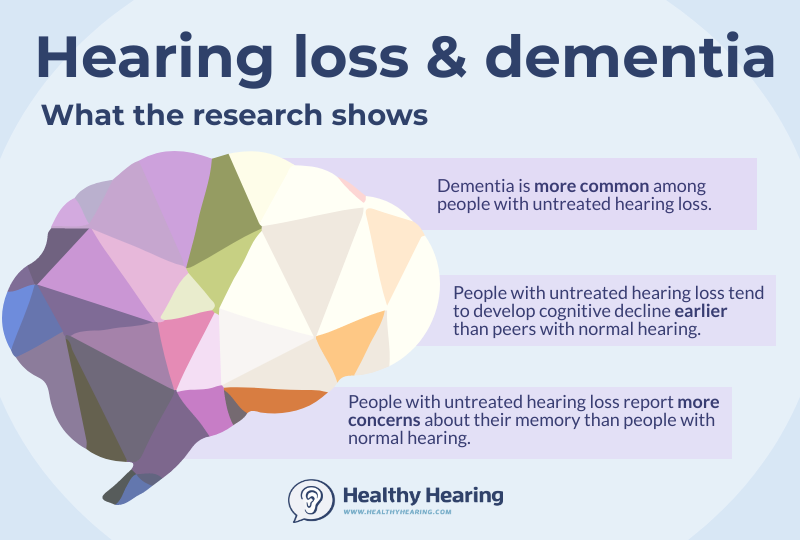
As we age, connections between cells in the brain are damaged, or some cells are lost—a process that has scarily been called “brain atrophy” or simply “cognitive decline," which can eventually lead to dementia. The reasons this happens are complex, of course. Some causes of cognitive decline are inevitable (such as genetics), but other causes are potentially modifiable. This means that when you take steps to prevent or treat hearing loss, you are helping reduce your risk of dementia, noted a landmark report from the British medical journal Lancet. Other risk factors you can modify include high blood pressure, high alcohol intake, smoking, depression, social isolation, and physical inactivity, among others. The big question you may be asking: If I have hearing loss, will hearing aids or cochlear implants help prevent dementia? Let's take a look at what the research says.
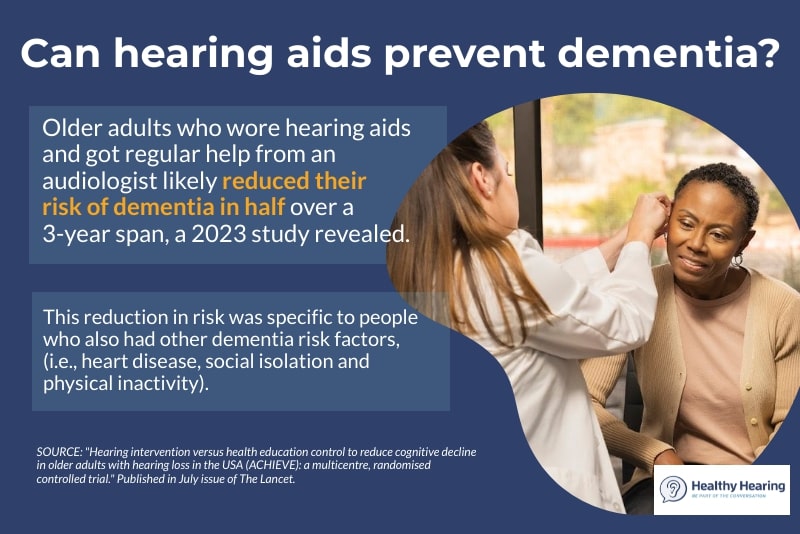
Encouraging newsFirst, a long-awaited 2023 randomized controlled trial provides important new clarity on this question. The study investigated the impact of hearing loss intervention on dementia. The intervention included use of hearing aids, a hearing “toolkit” to assist with self-management, and ongoing instruction and counseling with an audiologist. The results showed that over a three-year span, the intervention reduced the typical rate of expected cognitive decline among adults aged 70–84. However, the benefit was limited to people who had not just hearing loss but also other risk factors for dementia, such as heart disease, lower educational levels and limited physical activity. 'There's really no downside to it'Still, "the clinical takeaway is that almost anyone with hearing loss as an older adult should get their hearing checked and address hearing issues if there are any. There's really no downside to it. Hearing intervention comes at no risk," stated Dr. Frank Lin, lead author of the study and director of the Cochlear Center for Hearing and Public Health at Johns Hopkins University, in an interview on the study. Prior to that study, a 2022 meta-analysis of 31 studies found hearing aids and cochlear implants are linked with a lower risk of cognitive decline. The study was published in the Journal of the American Medical Association-Neurology. 
socially engaged, hearing aids can help prevent isolation. Separately, a very large observational study found that hearing aids appeared to delay the onset of cognitive impairment and dementia, along with depression, social isolation and falls that cause injuries. However, it was not a randomized controlled trial, so the results could have been for other reasons (for example, hearing aid wearers have higher incomes and thus more access to good medical care). As well, one large 2018 study analyzed results from more than 2,000 Americans age 50 and up who took word recall tests every two years for up to 18 years. Among those who acquired hearing aids along the way, the evidence suggested that the aids slowed the rate they lost memory of words. What are the best hearing aids for dementia?For people with hearing loss and diagnosed dementia, hearing loss should never be ignored, as it may exacerbate dementia symptoms, increase their disorientation and make their environment less safe (they can't hear a running faucet, for example). While there are no hearing products made specifically for dementia patients, there are plenty of hearing aid types and styles out there that can still be helpful. Here at Healthy Hearing, we frequently hear from the children and caretaker of adults with dementia who are thrilled with how hearing aids improved their loved one's life. You can see real-life examples in this article: You're never too old for hearing aids.
For caretakersIf you are the caretaker of someone with Alzheimer's or a similar disease that affects cognition, you are wise to investigate what hearing devices might work best. A hearing care provider will be your ally in this journey, as they'll know the latest products that may work for your loved one. You'll also be able to discuss your loved one's specific needs, habits and abilities with the hearing care specialist. Keep in mind hearing aids may not always be the best solution. Most premium hearing aids are designed to be discreet, so they may be too small and too easy to lose for a patient with dementia, especially if they have dexterity problems. Hearing aids also require that a person (or their caretaker) remember to keep the batteries charged and the device clean and in good working condition. In some cases, assistive listening devices may work better. Is there a link between hearing loss and dementia? |
Hearing centers close to me:
| Ohio State Univ Hearing |
| Nationwide Childrens Hospital |
| Ohio State University Audiology Clinic |
| Columbus Speech & Hearing Center |
Find hearing clinics in my country:


 Joy Victory has extensive experience editing consumer health information. Her training in particular has focused on how to best communicate evidence-based medical guidelines and clinical trial results to the public. She strives to make health content accurate, accessible and engaging to the public.