
www.HealthyHearing.com |
What is tympanometry and how is it used?This quick, non-invasive test is performed to assess the health of the eardrum and middle earDetermining the type and cause of your hearing loss can be like a putting together a puzzle, and the many tests that make up a thorough hearing evaluation are like pieces to that puzzle. One important way to measure your hearing and ear health is with a tympanometry test using a tympanometer, a device that is inserted into the ear to measure air pressure in the middle ear. 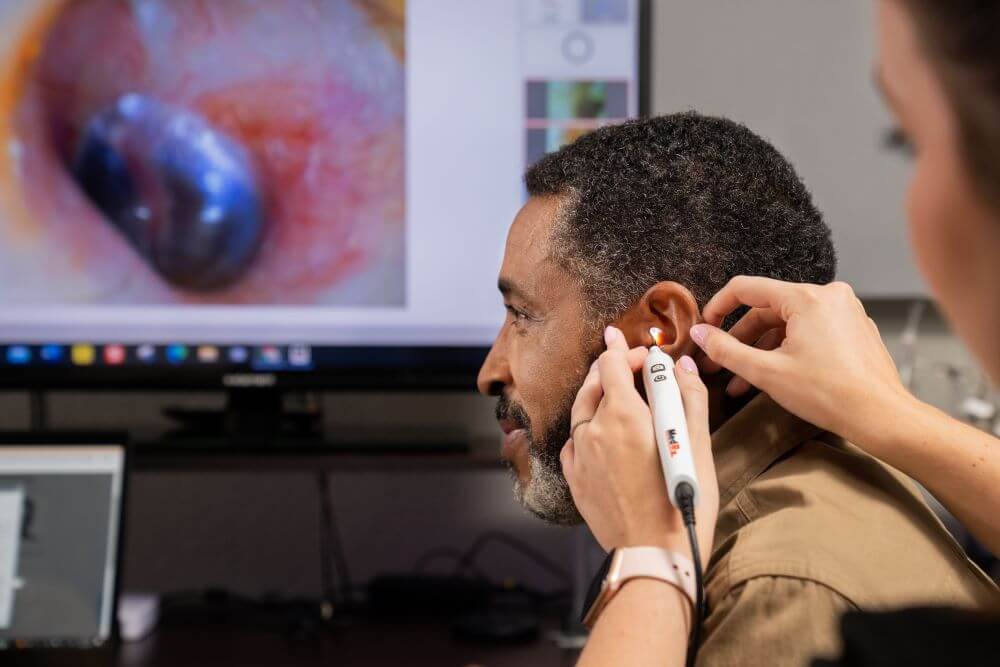
provider to visualize the ear drum and assess the overall health of the middle ear. The eardum is what separates your ear canal from your inner ear, and it's an important part of how we hear. As sound travels down the ear canal, the eardrum vibrates. This vibration is detected by tiny bones that then transmit that sound into the inner ear and nervous system, where your brain processes it. Eardrum problems—from infection to perforation—can profoundly affect how well you hear. Often used to assess the function of the middle ear, tympanometry is one test that can determine whether your hearing loss can be helped by hearing aids or whether a medical treatment is available to treat your loss instead. It's also used to detect middle ear problems, especially in children, even if they do not have hearing loss. Tympanometry definitions and terms.jpg)
In simple terms, tympanometry is a medical test that measures the function and movement of the eardrum and middle ear. The results of tympanometry are represented on a graph called a tympanogram.
Tympanometry can be performed either in a hearing healthcare professional’s or a doctor’s office. First, the clinician will do a visual inspection of your ear canal and eardrum using a lighted scope (otoscope) placed in the ear. Then, a probe with a flexible rubber tip will be placed in your ear. This probe is attached to a tympanometer.
What does tympanometry feel like in the ear?The test is usually quick and painless, unless the eardrum or middle ear are inflamed. Eardrum problems are a common cause of otalgia, better known as ear pain. The tympanometer causes the air pressure in your ear canal to change as you hear a low-pitched tone. The feeling is similar to the pressure changes felt during takeoff and landing when you’re on a plane. While the pressure is changing, measurements of your eardrum’s movement will be taken and recorded. It is important that you are quiet and still during this test. What is a tympanogram?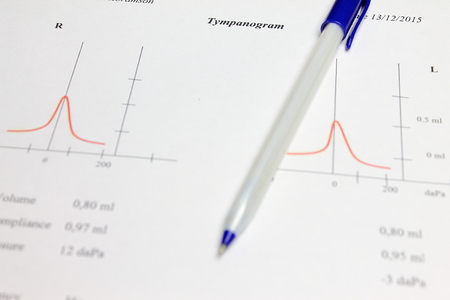
a tympanogram. A tympanogram is a graphic representation of how the eardrum moves in response to the air pressure in the ear canal. When the eardrum is activated by a sound wave, part of the sound is absorbed and sent through the middle ear, while the other part of the sound wave is reflected. The information derived from tympanometry provides additional information regarding middle ear function, especially eustachian tube function. If the tympanogram is within normal limits, the line makes a "mountain" shape around 0 daPA as the eardrum moves in response to the stimulus. The results are depicted in the picture to the right. If the tympanogram is abnormal, it may peak before or after the 0 daPa mark, or a flat line will be plotted if the eardrum doesn't move (due to perforation) or can't move (due to fluid or another cause). Note that daPa stands for decapascals, a unit of air pressure. Why is tympanometry used?Tympanometry is typically used to detect or rule out several things: the presence of fluid in the middle ear, a middle ear infection, a hole in the eardrum (perforation), or eustachian tube dysfunction. This test is especially important for children who have suspected middle ear infection or other problems, but it's also sometimes given to adults as part of a routine hearing test to determine if there are any middle ear problems contributing to hearing loss. Adults and children who are seeking medical clearance for hearing aids will usually receive a tympanometry test. Fluid behind the eardrum is the most common cause of an abnormal tympanogram because it prevents the eardrum from moving and transmitting sound properly. This condition is nearly always temporary and medically treatable. If you have fluid in your ear, you may not need hearing aids to correct your hearing loss, but you should consult with your physician or a hearing health professional near you to determine the best course of action. Joy Victory, managing editor, Healthy Hearing
|
Hearing centers close to me:
| Ohio State Univ Hearing |
| Nationwide Childrens Hospital |
| Ohio State University Audiology Clinic |
| Columbus Speech & Hearing Center |
Find hearing clinics in my country:


 Joy Victory has extensive experience editing consumer health information. Her training in particular has focused on how to best communicate evidence-based medical guidelines and clinical trial results to the public. She strives to make health content accurate, accessible and engaging to the public.